André MattosContact
Video: /projects/alok-alive/alok-alive-video.mp4
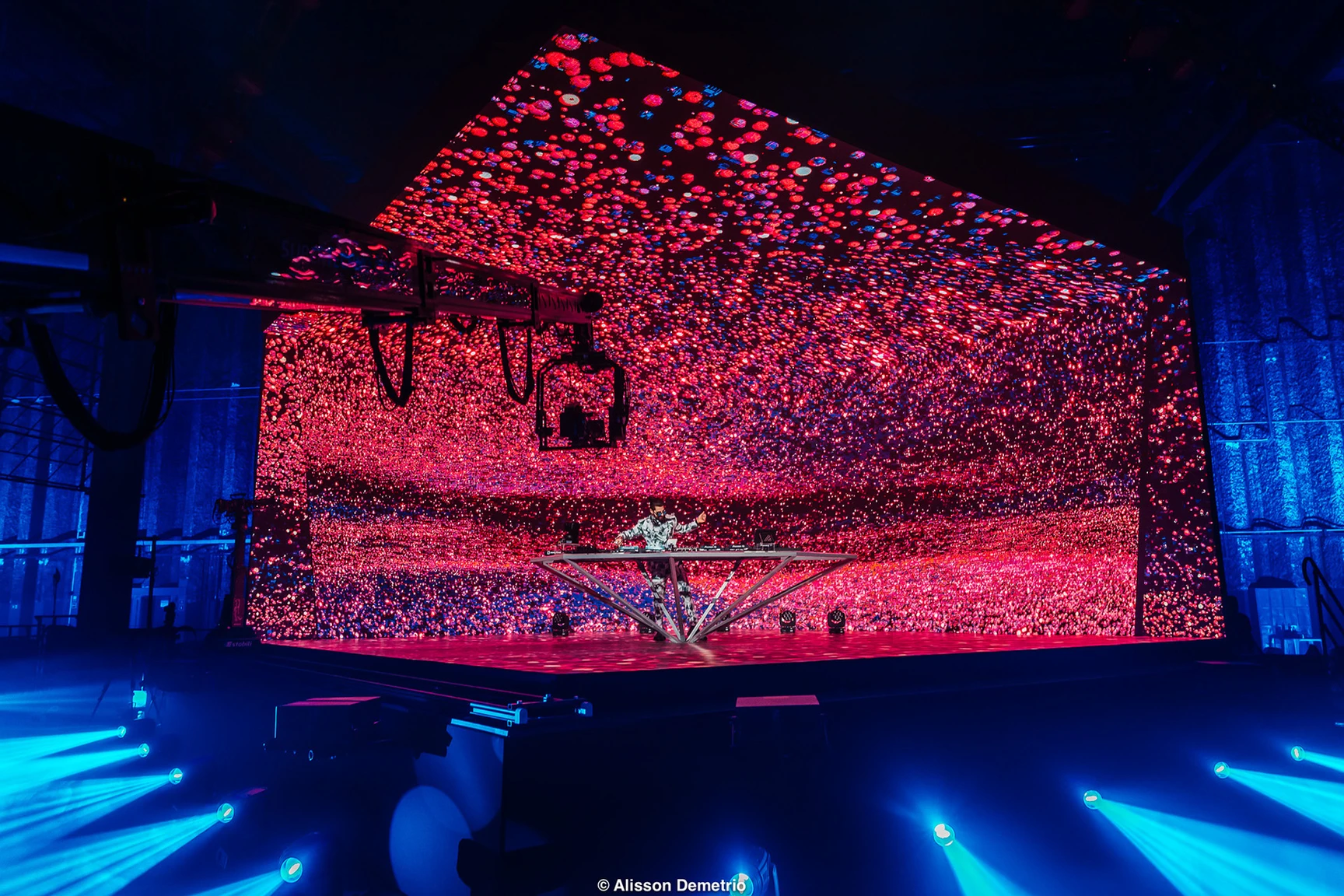
As part of the VFX team, I created four visually dynamic scenes synchronized with the music. These included a swarm of particles resembling a flock of fish, a metallic wall with rings pulsing outward, a neural network of pulsing light connections, and a glowing mycelium with giant, light-emitting mushrooms. Each scene was carefully timed to match the music's drop moments and beat flashes.
Video: /projects/alok-alive/alok-alive-fishes-short.mp4
Video: /projects/alok-alive/alok-alive-neurons-short.mp4
Video: /projects/alok-alive/alok-alive-orbitals-short.mp4
Video: /projects/alok-alive/alok-alive-mycelium-short.mp4
To create these scenes, I designed generative art systems using Unity's VFX Graph, Shader Graph, and compute shaders.

All scenes were timecoded in Unity's Timeline, with the render output sent over the network to the Disguise media server, the brain of the installation concert.
Video: /projects/alok-alive/alok-alive-neurons-vfx.mp4
The director's cameras were precisely tracked in real-time, with spatial positioning data sent back to Unity to ensure the visuals on the LED panels displayed the 3D content from the correct angle, creating the illusion of an infinite background for Alok's performance on stage.
Alok: Alive
Alok: Alive
Alok: Alive

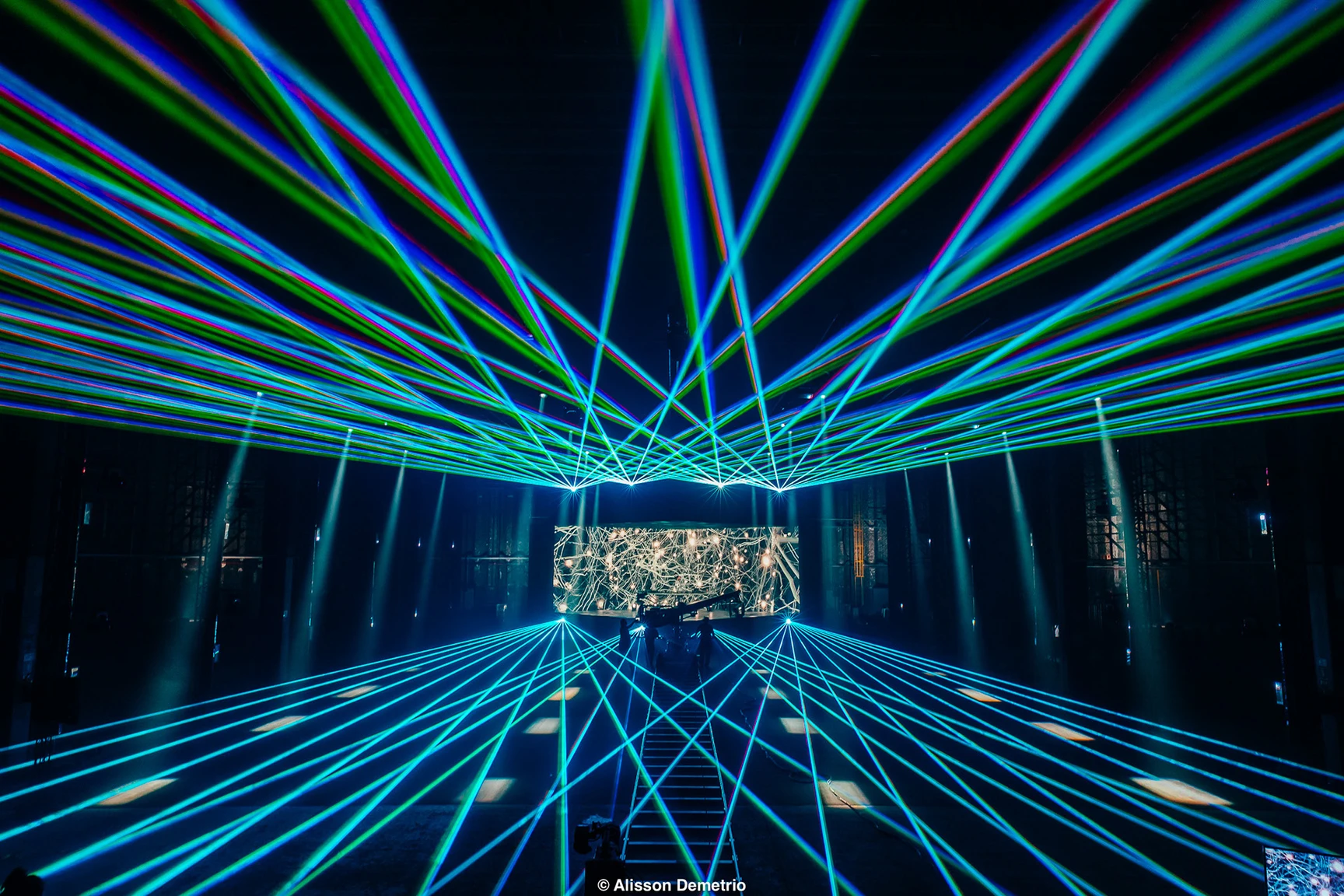
The Alive concert was a groundbreaking live event connecting fans with Alok through virtual production and XR. Rendered in real time, it was streamed on YouTube, where it has over 14 million views, showcasing immersive environments and visuals synced to the music.

Client
Alok
Role
VFX Technical Artist
As part of the VFX team, I created four visually dynamic scenes synchronized with the music. These included a swarm of particles resembling a flock of fish, a metallic wall with rings pulsing outward, a neural network of pulsing light connections, and a glowing mycelium with giant, light-emitting mushrooms. Each scene was carefully timed to match the music's drop moments and beat flashes.
To create these scenes, I designed generative art systems using Unity's VFX Graph, Shader Graph, and compute shaders.

All scenes were timecoded in Unity's Timeline, with the render output sent over the network to the Disguise media server, the brain of the installation concert.
The director's cameras were precisely tracked in real-time, with spatial positioning data sent back to Unity to ensure the visuals on the LED panels displayed the 3D content from the correct angle, creating the illusion of an infinite background for Alok's performance on stage.